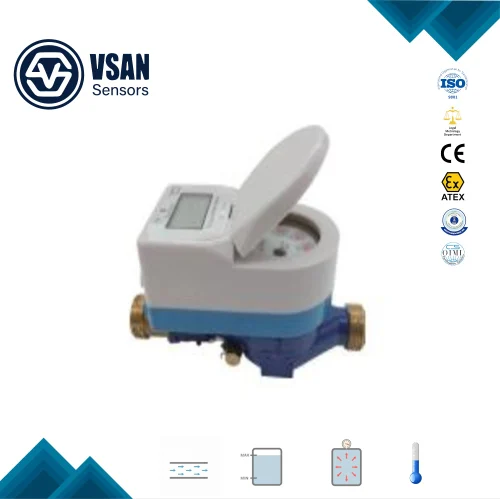
An IC card flow meter is a smart, prepaid metering device that uses a microcomputer and an integrated circuit (IC) card to measure and manage the flow of water, gas, or other liquids. Users prepay for their usage, and the meter automatically dispenses the corresponding amount of media.
How IC Card Flow Meters Work
IC card flow meters integrate a traditional mechanical flow sensor with an electronic module and a valve.
Prepayment: The user purchases a specific volume of the resource (e.g., water) from a management department, which then writes that data onto their unique IC card.
Data Transfer: The user inserts their IC card into the meter’s reader. The meter’s internal microcomputer module reads the data, confirms the balance, and opens an internal electric valve to begin supply.
Measurement and Control: As the fluid flows, a sensor measures the consumption and relays the data to the microcomputer. The meter displays the remaining balance (both mechanically and digitally) and subtracts the used volume.
Automatic Shut-off and Alarm: When the remaining volume reaches a preset alarm limit, the meter’s valve will automatically close, and an alarm will display, prompting the user to recharge their card. The valve closes completely when the balance reaches zero.
Security: The system is designed with features like anti-magnetic attack functions and data memory to prevent tampering and data loss.
Key Features and Applications
IC card flow meters offer several benefits for efficient resource management, primarily in residential and commercial settings.
Prepaid Management: Enables a “purchase first, then use” model, which helps prevent bill arrears for utility providers.
Billing Efficiency: Streamlines the billing process, eliminating the need for manual, on-site meter reading and estimation.
User Responsibility: Encourages users to be conscious of their consumption as they can track their usage in real-time.
Data Storage: Equipped with non-volatile memory to save consumption data for over 10 years, even during power loss.
Remote Management Options: Some advanced models incorporate features like LoRa, GPRS, or RS485 connectivity for remote monitoring and control by management.
These meters are widely used for:
Residential water management
Commercial spaces (hotels, office buildings)
Industrial production and water supply
Public places (schools, community bathhouses)
Measuring various media, including cold and hot water, gas, and steam


 Innov Touch Technologies Pvt Ltd.
 Enquire Now